
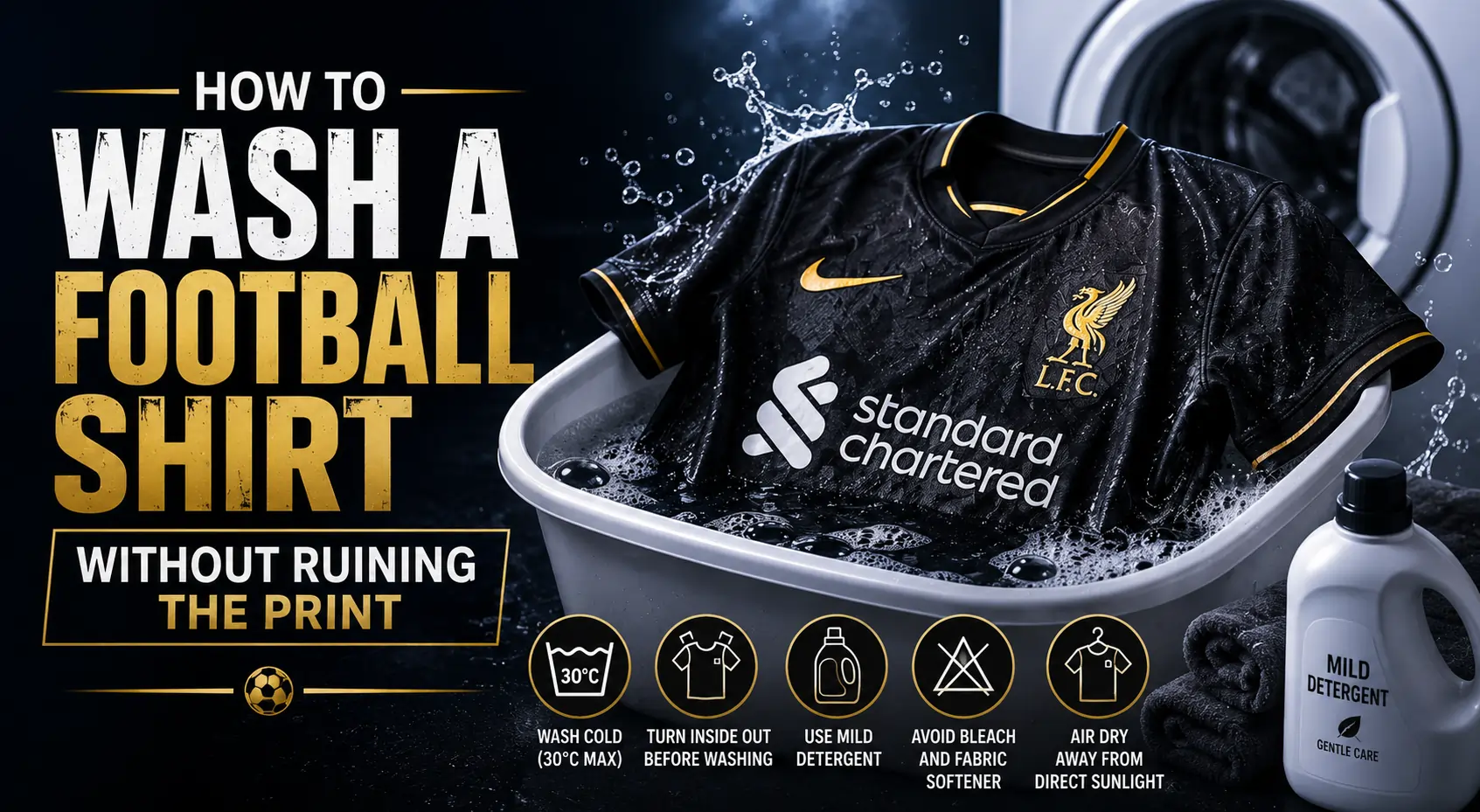
Quick answer: To wash a football shirt without ruining the print, turn it inside out, wash on a cold or cool cycle at thirty degrees using a small amount of mild liquid detergent, and skip the fabric softener. Always air dry it and never use a tumble dryer, as heat is the main cause of cracked and peeling prints. That is the whole method in a sentence. Below we explain each step so your badge, name, and number stay crisp for years.
Why Football Shirts Need Special Care
Football shirts are not like ordinary t-shirts. They are made from engineered polyester designed to wick away sweat, and the names, numbers, and badges are usually heat-pressed transfers or printed vinyl rather than woven in. That printing is the most vulnerable part of the shirt. High temperatures, harsh detergents, and rough handling can all cause it to lift, crack, or peel over time. Get your approach right and you protect both the fabric and the print at once.
Before You Wash
A little preparation goes a long way. Turn the shirt inside out before it goes near the machine. This is the single most important step, because it puts the badge, name, and number facing inward, away from the friction of the drum and other garments. The fabric takes the rubbing instead of the transfer.
Next, treat any stains gently with a dab of mild detergent, avoiding hard scrubbing over printed areas, and never use bleach. Fasten zips and tie up drawstrings so they cannot snag. Finally, sort your wash. Always wash your shirt with similar colours to avoid dye transfer, and keep it away from heavy items like jeans and towels, which create friction that wears printing down.
How to Wash a Football Shirt Step by Step
Once the shirt is prepped, the wash itself is simple.
Select a cold or cool wash, ideally around thirty degrees Celsius. Heat is the main enemy of printed transfers, since it softens the adhesive behind the print and leads to cracking and peeling.
Choose a gentle or delicate cycle if your machine has one. The slower spin and reduced agitation are kinder to both fabric and print than a standard cottons cycle.
Use a mild liquid detergent, and only a small amount. Powder detergents can be abrasive and may not dissolve fully, leaving residue behind. Liquid is gentler and rinses cleaner.
Skip the fabric softener. This catches a lot of people out. Softener coats polyester fibres, clogging the material and reducing its ability to wick moisture, which is the whole point of a performance shirt. It can also react badly with printed areas over time.
For a signed or one-off personalised shirt, consider hand washing instead. Soak it in cool water with a little mild detergent, agitate gently by hand, then rinse thoroughly.
Drying Without Damage
How you dry your shirt matters just as much as how you wash it. The golden rule is to keep the tumble dryer well away from your football shirts. Its intense heat is brutal on printed transfers and can shrink or warp polyester. It is the most common way people accidentally ruin a good shirt.
Air dry every time instead. Hang the shirt on a line or rack, or lay it flat if you are worried about stretching, and keep it out of harsh direct sunlight, which fades both colour and print. Polyester dries quickly thanks to its low water absorption, so it is usually ready within a couple of hours. Leave it inside out while drying for extra protection.
Ironing and Storage
You will rarely need to iron a football shirt, since polyester is naturally wrinkle-resistant and hanging it up promptly keeps it smooth. If you must press it, never iron directly over the print. Turn the shirt inside out, use the lowest heat, and place a thin cloth between the iron and the fabric. A steamer held at a distance is even safer. For storage, fold loosely or use a padded hanger, and keep collectible shirts somewhere cool, dry, and out of direct light.
Looking to add a new shirt to your collection? Browse our full range of international football shirts or our retro football shirts, all made from quality breathable polyester.
Frequently Asked Questions
Can you wash a football shirt in the washing machine?
Yes. Turn it inside out, use a cold or cool cycle at around thirty degrees with mild liquid detergent, and avoid fabric softener. The machine is perfectly safe as long as the temperature stays low.
What temperature should you wash a football shirt at?
Thirty degrees Celsius or cooler is ideal. Higher temperatures soften the adhesive behind printed names and numbers, which causes them to crack and peel.
Can you tumble dry a football shirt?
No. The heat of a tumble dryer is the most common cause of ruined prints and can shrink or warp the polyester. Always air dry instead.
Why should you avoid fabric softener on football shirts?
Softener coats the polyester fibres, which reduces their moisture-wicking performance and can damage printed areas over time. Your shirt does not need it.
How do you get the smell out of a football shirt?
Soak it in cool water with a little white vinegar before a normal cool wash. This breaks down odour-causing residue without the heat or harsh chemicals that damage prints.

Leave A Comment