
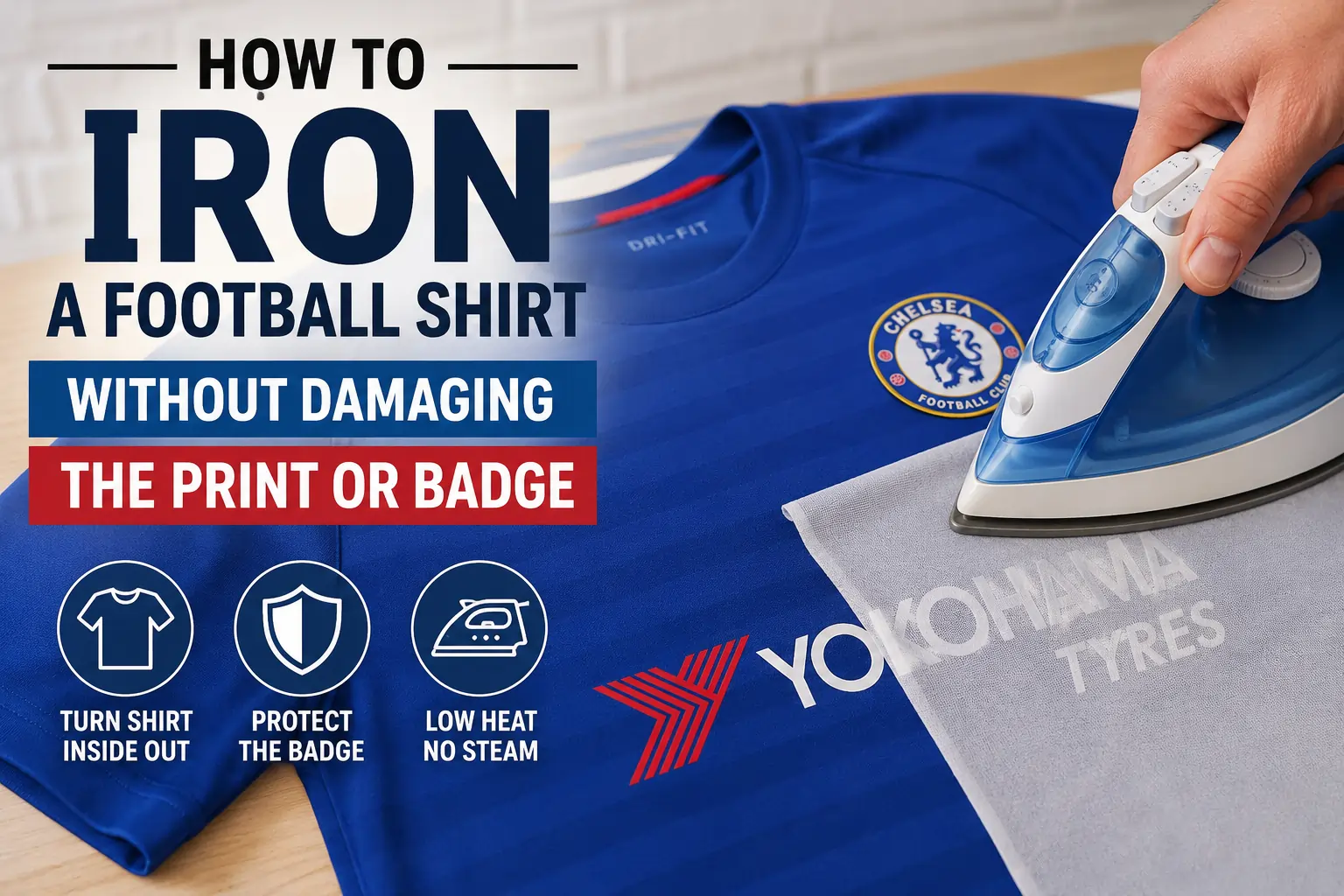
Quick answer: To iron a football shirt without damaging the print or badge, turn it inside out, set the iron to its lowest heat with no steam, and place a thin cloth between the iron and the fabric. Never press directly onto the printed name, number, or crest. Better still, use a steamer held at a distance, which removes creases without any direct contact. Below we explain each step so your shirt stays crisp and intact.
Why Football Shirts Need Careful Ironing
Football shirts are made from engineered polyester, and the badges, names, and numbers are usually applied as heat-pressed transfers or printed vinyl. That is the key thing to understand. Those prints were bonded to the fabric using heat in the first place, which means too much heat from an iron can soften the adhesive and cause them to bubble, crack, peel, or melt. The polyester itself is also sensitive to high temperatures and can scorch, shrink, or develop a shiny mark if pressed too hot.
The good news is that football shirts rarely need much ironing at all. Polyester is naturally wrinkle-resistant, so a careful approach and a few simple precautions are all it takes to keep both the fabric and the print looking their best.
Before You Start
A little preparation prevents most accidents. First, check the care label inside the shirt for any specific guidance from the manufacturer. Then turn the shirt inside out. This single step protects the print and badge by keeping them away from direct contact with the iron, letting you press the inside of the fabric instead.
Set up on a clean, flat ironing board and make sure the surface of your iron is clean, since any residue can transfer onto the shirt. Have a thin cotton cloth or tea towel ready to use as a protective barrier, often called a pressing cloth. This is your most important tool for keeping prints safe.
How to Iron a Football Shirt Step by Step
With the shirt prepped and inside out, you can press it safely by following these steps.
Start by setting your iron to its lowest heat setting, usually marked as synthetic, nylon, or a single dot. Polyester needs a cool iron, and a hot setting is the quickest way to cause damage. Turn the steam function off, as excess moisture and heat together can affect printed areas.
Lay your pressing cloth over the area you want to iron. Never let the iron touch the fabric directly over any printed section. The cloth spreads and reduces the heat, protecting both the transfer and the polyester underneath.
Press gently and keep the iron moving. Do not hold it in one spot, which can build up heat and scorch the material. A light, brief pass is all that is needed to smooth out creases on a polyester shirt.
When you reach the badge, name, or number, do not iron over them at all, even with a cloth, unless absolutely necessary. If a crease runs right through a printed area, press very lightly around it through the cloth rather than directly on top. The aim is always to keep direct heat off the print.
The Safer Option: Use a Steamer
If you want to avoid any risk to your shirt, a clothes steamer is the better choice. Steamers relax creases using gentle vapour rather than direct contact, so there is no pressure or scorching heat touching the print at all. Simply hang the shirt up, hold the steamer a few centimetres away from the fabric, and let the steam do the work. Keep the nozzle moving and avoid holding it too close to the badge or lettering. This method is quick, effective, and by far the kindest way to freshen up a football shirt.
How to Avoid Ironing Altogether
The easiest way to protect your print is not to iron at all. Because polyester resists wrinkles so well, you can usually keep a shirt smooth with good habits. Hang it up promptly after washing while it is still slightly damp, and most creases will drop out on their own as it air dries. Smooth it gently by hand on the hanger. Avoid leaving it screwed up in a pile or crammed into a tight drawer, which is what causes stubborn creases in the first place. A little care after washing means you will rarely need to reach for the iron.
Frequently Asked Questions
Can you iron a football shirt?
Yes, but with care. Turn it inside out, use the lowest heat with no steam, and always place a cloth between the iron and the fabric. Never press directly onto the badge, name, or number.
What heat setting should you use to iron a football shirt?
Use the lowest setting, usually labelled synthetic, nylon, or one dot. Polyester needs a cool iron, as high heat can scorch the fabric and damage printed transfers.
Can you iron over a football badge or print?
No. Ironing directly over a badge, name, or number can cause it to crack, peel, or melt. Always iron around printed areas, or use a steamer to avoid contact altogether.
Is a steamer better than an iron for football shirts?
Yes. A steamer removes creases using gentle vapour without any direct contact, making it the safest option for protecting both the print and the polyester fabric.
How do you get creases out of a football shirt without ironing?
Hang it up promptly after washing while slightly damp and let it air dry. Polyester is wrinkle-resistant, so most creases drop out naturally without any ironing needed.
Leave A Comment